Guided Growth & Airway Development for Kids in Newtown, PA
Kids' jaws and airways shape early. Catching airway issues now prevents bigger problems later.
Why Early Intervention for Kids' Airways Matters
Most Craniofacial Growth Happens Early
During a Comprehensive Child Examination, if your child regularly struggles to breathe through the nose, it might indicate a budding airway dysfunction. Airway dysfunction can influence facial development, with the impact being especially pronounced in growing children. By age two, half of a child's craniofacial growth is complete. By age four, it's three-quarters. By the time they reach twelve, boys have completed 89% and girls 94% of their craniofacial development. An unaddressed mouth breathing issue during these formative years can set the stage for future developmental concerns.
Signs Parents Often Miss
Clues that your child may be having disrupted sleep include snoring, sleeping in unusual positions, grinding their teeth, wetting the bed, and having night terrors. While they're awake, they may exhibit irritability, moodiness, drowsiness, trouble concentrating, fidgeting, and hyperactivity. This is why many children are misdiagnosed with ADHD when it could actually be related to sleep disordered breathing. Surveys suggest up to 50% of those children may be medicated unnecessarily.
What Happens Without Treatment
Children with underdeveloped jaws may have difficulty breathing through their nose and rely on mouth breathing. The repercussions can include an elongated facial structure, narrow facial appearance, sunken upper facial features, less defined jaws, and a recessed chin. Studies show that up to 63% of children breathe through their mouth, and this can lead to infections in tonsils and adenoids. Then enlarged tonsils and adenoids make it even harder to breathe and sleep. It can become a poor health cycle.
How Vivos Guides Help
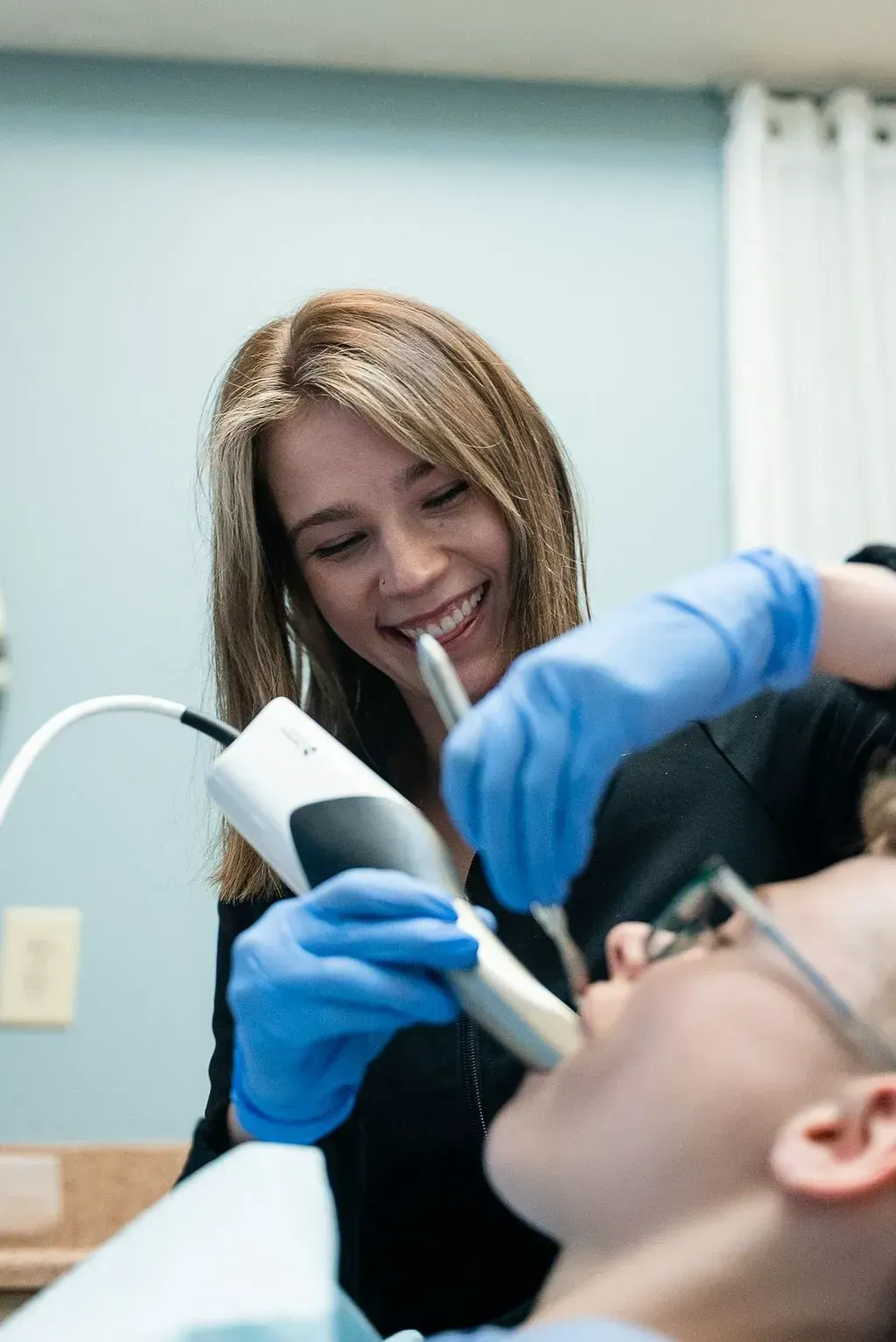
Help children breathe properly through their nose by guiding the growth and development of their jaws and oral activity. Vivos Guides are designed to work harmoniously to promote a child's natural growth and development, leading to improved function of the airway and facial symmetry. Registered with the FDA as a Class 1 device, these guides have a long history of safety and efficacy going back over 50 years. Treatment can begin for children as young as 3, and this may also prevent the need for traditional braces at an older age.
Like a Football Player's mouthguard, but for Growing
When kids' baby teeth come in, there should basically be spaces between all the baby teeth. If there are no spaces, you've got crowding coming. A lot of orthodontists wait until almost all baby teeth are gone before they put in an expander — or worse, take teeth out to make space. We don't want that. There are appliances kids can wear as they're growing. It's like a football player's mouthguard. The spaces for the upper and lower teeth that come in. There are four different appliances over time — it grows as they grow, lining the teeth up so ideally they won't need orthodontics later. Most kids do 80–90% of their growth and development by age 4 or 5. Catching it early gets them the benefit.
How much does Guided Growth cost in Newtown, PA?
Cost depends on the appliances needed and the length of treatment. Most children progress through 2–4 different appliances over the course of treatment. This is one area where dental insurance may provide coverage — and we'll help you navigate that. We're transparent with fees before any treatment begins, and Alphaeon and CareCredit financing are available if needed.
Is Guided Growth painful for my child?
No. The appliances are similar to a sports mouthguard — removable, gentle, and well-tolerated by most children. Some kids feel mild pressure as the appliance does its work, but pain is rare. Many parents report their child sleeps better within the first few weeks.
How long does treatment take?
Treatment is gradual and aligns with your child's natural growth, typically lasting 12–36 months total across multiple appliance phases. We see your child every 4–6 weeks during active treatment to monitor progress and adjust the plan as they grow.

Guided Growth in Newtown, PA
➔ Treatment can begin as young as age 3
➔ FDA Class 1 device with 50+ years of safety data
➔ Often prevents the need for traditional braces
➔ Supports better breathing, sleep, focus, and growth
Frequently Asked Questions
When should my child be screened for airway issues?
As early as age 3. The American Academy of Pediatric Dentistry recommends Airway Screening at every dental visit. If your child snores, mouth breathes, has restless sleep, or has been labeled with ADHD-like symptoms, an airway evaluation is worth doing now.Will my child still need braces?
Often, no — or far less treatment than they would have needed otherwise. By guiding the jaw to develop properly, we make space for permanent teeth to come in correctly. Some kids still need minor orthodontic finishing, but many avoid full braces entirely.Is this covered by insurance?
Coverage for Guided Growth varies widely by plan. Some plans cover portions as orthodontic care; others don't cover it at all. We verify your benefits and present clear cost expectations before treatment. Alphaeon and CareCredit financing is available.What if my child won't keep the appliance in?
It happens, especially in the early days. We work with you and your child to make compliance easier — starting with shorter wear times, building up gradually, and explaining the why in age-appropriate language. Marcie's Myofunctional Therapy work is often part of this for kids who need it.
The Mouth-Body Connection —
Lantzy DMD Blog
Dementia prevention. Sleep apnea. Why your child's behavior might be a breathing problem. Dr. Bob writes about the things most dentists don't, because he believes patients deserve to understand what's really going on.
Explore the Link Between Your Oral Health and Overall Vitality
Discover the five surprising ways your dental health affects your overall health with our free resource, The Mouth-Body Connection: Why Your Oral Health Shapes Your Whole Health.